Tangguh Pria Natural supplements for men
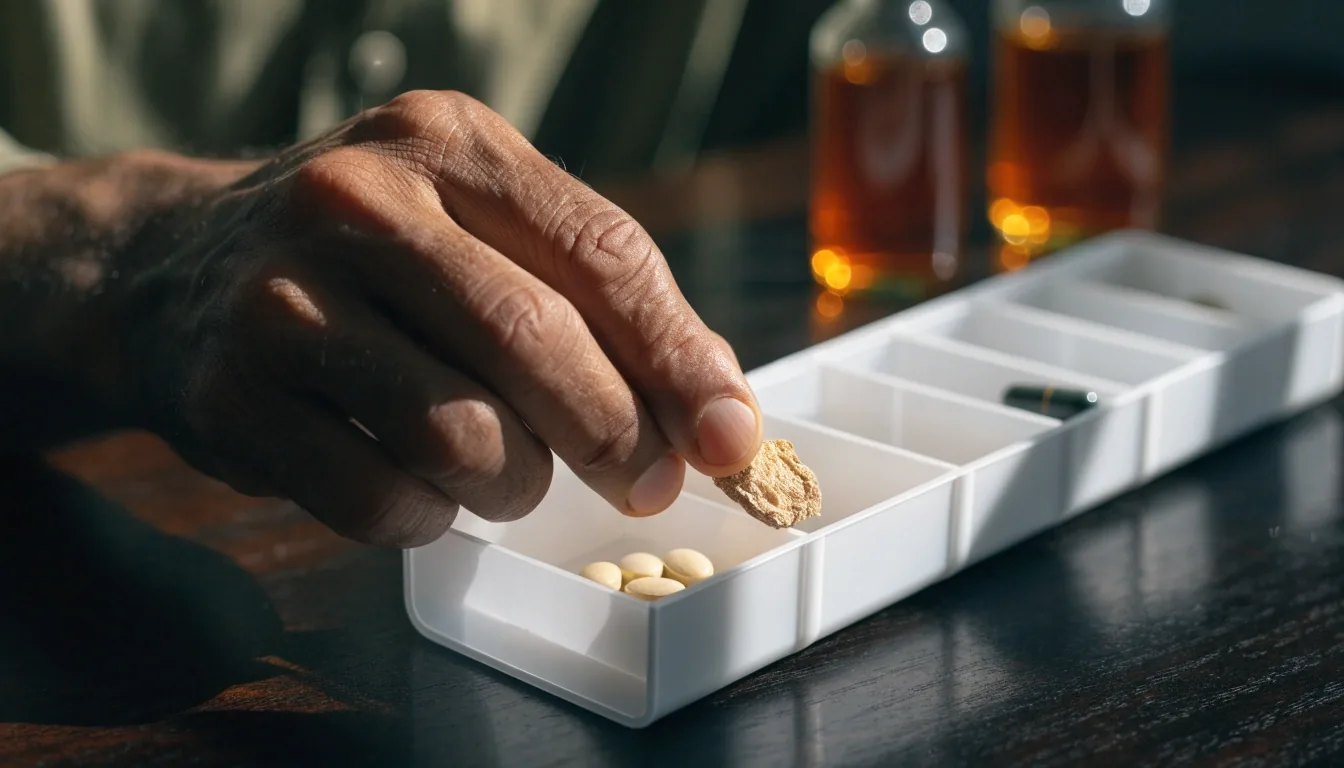
A single dried ginseng root on a warm grey surface, cut by one hard band of side light

Ingredient guide

Ingredient Guide: Reading Men’s Labels

Saw palmetto, Panax ginseng, maca root, vitamin B6 — the four names you meet most often in natural supplements for men, explained in plain language so a label stops being guesswork.

What you can and cannot learn from a panel

This guide covers the botanical and vitamin ingredients you meet most often in men’s formulas sold in Indonesia. The goal is narrow: after reading, you should be able to look at a label and know what each name refers to, how it is usually presented, and which questions the label leaves open.

What a label does tell you

Which ingredients are present, the form they take — powder or standardized extract — and whether an amount per serving is stated. Those three details account for most of the real difference between products that carry the same ingredient name.

What it will not tell you

How an ingredient will fit your own week, or how it sits alongside anything else you take. We describe ingredients and formats here. We do not tell you what to take, and we keep that boundary deliberately.

Read the rest of the guide as a way to ask better questions of a panel, not as a reason to buy any particular bottle. If you have a health concern or take prescribed medicines, that is a conversation for a qualified professional.

The four names on a men’s formula panel

Each of these appears constantly across vitamins and minerals for men, from single-ingredient capsules to long multivitamin blends. Here is what each one is, how it is usually sold, and the detail on the panel that actually separates one product from another.

At a glance

  • Saw palmetto Berry extract · mature-men’s formulas
  • Panax ginseng Asian root · vitality and energy blends
  • Maca root Raw root, powder or capsule · endurance formulas
  • Vitamin B6 B-complex vitamin · often paired with zinc
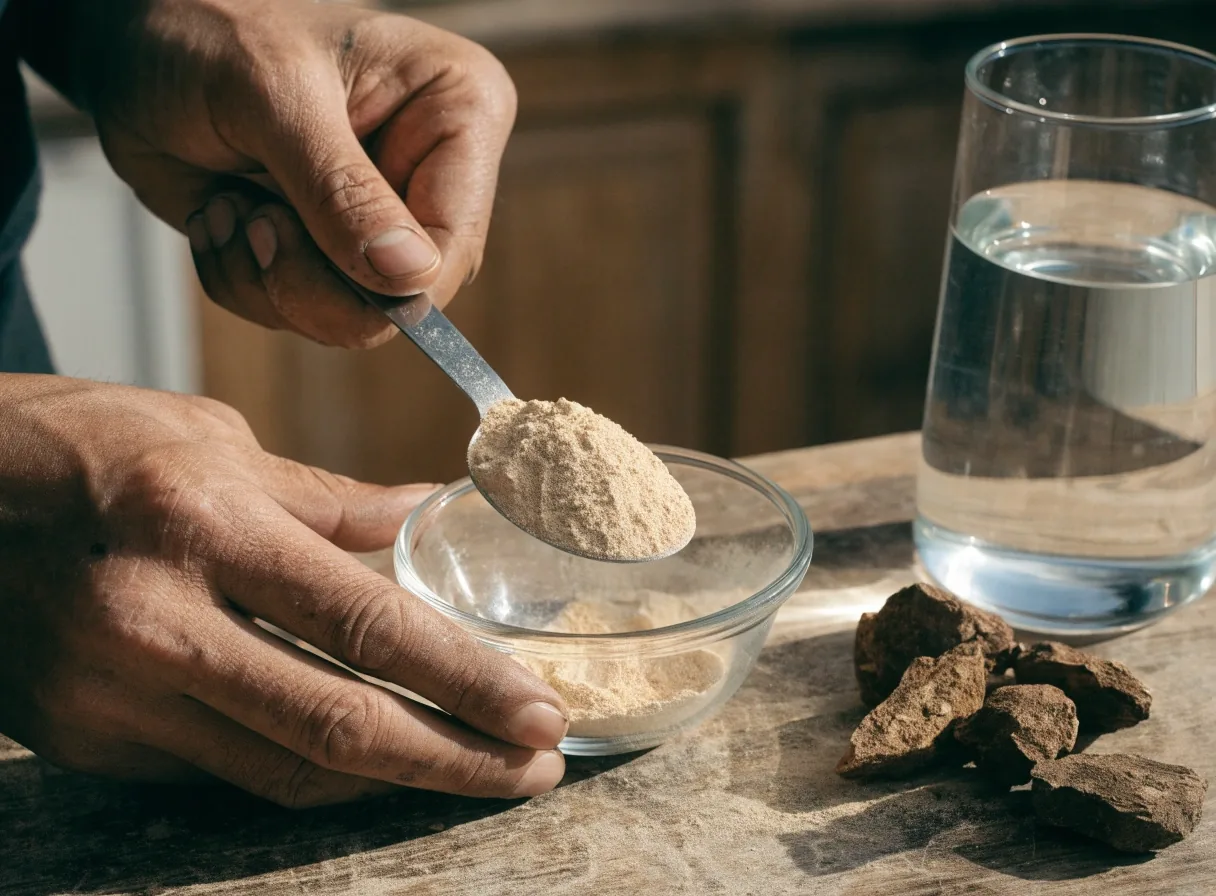
A small heap of pale maca root powder on dark slate, lit by one hard side source
Maca arrives as raw root, milled powder or an extract — and the format changes how predictable a daily amount is.

Saw palmetto and formulas for mature men

Saw palmetto is a common supplement ingredient in men’s health categories and appears frequently in formulas aimed at mature men. In retail it usually shows up inside broader wellness positioning rather than as a standalone product, and it is a familiar line item in international vitamin and herbal ranges.

On a label, check two things: whether it is listed as a standardized extract or a plain powder, and whether an amount per serving is given. Those two details vary widely between products that carry the same ingredient name, so a berry extract named the same way on two panels can mean quite different things.

Panax ginseng: the default vitality botanical

Panax ginseng is a classic Asian herb used in energy and wellness supplements, and it remains one of the most frequent inclusions in men’s formulas and multivitamin blends. Supplement marketing commonly links it to fatigue and vitality positioning, and it has a long history in traditional herbal use that predates the modern retail shelf.

Because it appears in so many products, the useful comparison is not presence but placement: whether ginseng sits in a short, quantified panel or inside a long blend with no amounts listed. A root named near the top of a short panel with a stated amount is far easier to evaluate than the same name buried in a blend.

Maca root: powder, extract, or blend

Maca root is the raw-root source behind maca supplements and appears in a wide range of men’s vitality and endurance formulas. It is sold in capsule, powder, and blend formats, which is a meaningful difference for daily use. Powder asks for a shaker and a consistent habit. Capsules travel better and dose more predictably. Blends often combine maca with other botanicals, which can make it harder to tell how much maca you are actually getting.

As a familiar ingredient in global catalogues, maca is a good one to learn to read properly — once you can spot the format and the amount, you can do the same on every other root on the shelf.

Vitamin B6 and the B-complex habit

Vitamin B6 is a standard B vitamin included in many men’s formulas and is often paired with zinc in supplement retail. It is part of the broader B-complex group frequently used in energy-support products, and it shows up in formulas that emphasize daily nutrition and metabolism.

When you compare two products, check whether B6 is listed alone or as part of a full B-complex panel. The second option usually signals a formula built around daily coverage rather than a single-ingredient focus, which is a useful thing to know before you compare price per capsule.
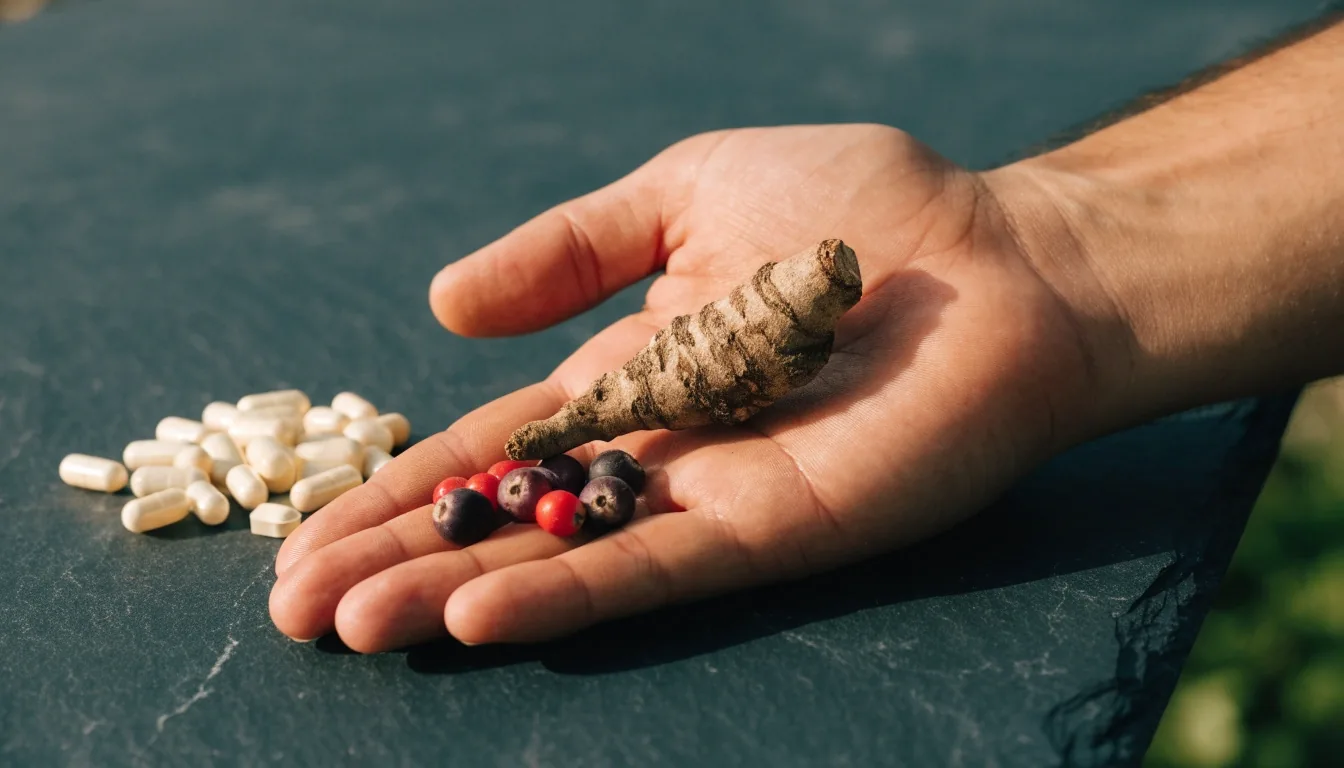
An open seven-compartment weekly organiser and unlabeled amber bottles on a dark bench, sliced by one diagonally raking light band

A week’s worth of directions, laid out in compartments. The ingredient name is only the first of four things a panel tells you.

The other names on Indonesian shelves

Tongkat ali, purwoceng, and black ginger appear regularly in local catalogues alongside ginseng and maca. You will often see them described as ekstrak tumbuhan or sold under kapsul nabati positioning.

Treat them the way you would treat any botanical: find the amount per serving, check whether the product states an extract ratio, and note where the ingredient sits in the list. Order in a panel is not regulated the way amounts are, but a botanical that appears last in a long blend is usually present in a small quantity.

  • Tongkat ali Root extract
  • Purwoceng Local botanical
  • Black ginger Rhizome
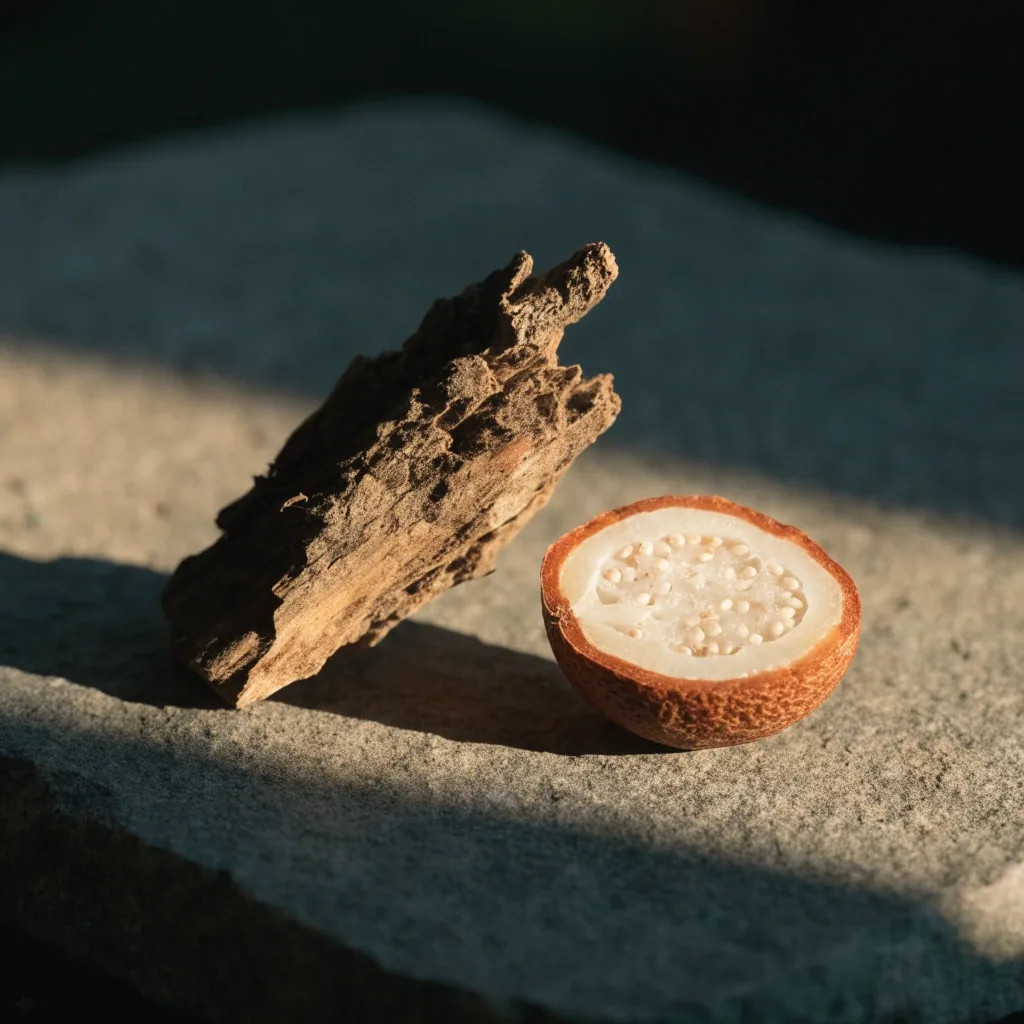
A dried tongkat ali shard and a halved saw palmetto berry side by side on a warm grey surface under hard side light

Extract ratios and what “standardized” means in practice

An extract ratio such as 10:1 describes how much raw plant material went into a concentrated amount; a higher first number means a more concentrated extract. Standardization means the maker is targeting a specific marker compound at a stated level, which makes batch-to-batch comparison easier.

Neither term tells you whether the product suits you. What they do tell you is whether the manufacturer is willing to state specifics. A vague botanical line with no amount and no ratio is the least informative version of the same ingredient.

Turn a claim into a question, then take it to the panel

When marketing language on the front of a package sounds strong, translate it. “Energy support” becomes: which B vitamins, at what amounts per serving? “Vitality” becomes: which botanicals, in what form, at what quantity? If the panel answers, you have learned something real. If it does not, you have learned something about the product’s priorities. That single habit resolves most of the confusion this category creates.

It also keeps you inside what an ingredient guide can honestly do. Front-of-pack wording is written to be read quickly; the panel underneath is written to be checked.

What a label will not tell you

Labels do not tell you how an ingredient will feel in your week, whether it fits your routine, or how it sits alongside anything else you take. They also do not tell you whether the rest of your habits support the goal you bought the product for.

We keep this boundary deliberately. If you have a health condition or take prescribed medicines, that is a conversation for a qualified professional, not an ingredient guide. Our pages describe what is in the bottle and how to read it — nothing more.

That limit is not a gap in the guide. It is the part of the guide that keeps the rest of it useful.

Where to go next

The ingredient names above are the vocabulary. These three pages are where the vocabulary gets used.

Formula line-ups, side by side

See how ingredient focus plays out across several well-known men’s multivitamins and botanical blends, so you can read a shelf the way you read a panel.

Compare formula line-ups

Routine and timing

The energy and endurance page covers when and how a daily habit fits into a working week, which is where most of the practical difference actually lives.

Read the energy routine guide

Correct an ingredient entry

If a label detail on this page needs correcting — a format, an amount, a wording — write to us. We revise ingredient entries when the packaging changes.

Send a correction

Questions readers send most

Short answers to the three things people ask after reading a label for the first time.

Does a longer ingredient list mean a better formula?

No. A short panel with clear amounts per serving is easier to evaluate than a long blend with no figures. Length is not the signal; stated detail is.

What does an extract ratio like 10:1 mean?

It describes how much raw plant material was concentrated into the extract. Higher first numbers indicate a more concentrated extract, which makes side-by-side reading more meaningful than comparing names alone.

Is vitamin B6 usually included on its own?

Usually it is part of a B-complex panel, and it is often paired with zinc in men’s retail formulas. That placement tells you whether the product is built around daily coverage or a single ingredient.

Still unsure how to read something on a panel? Send the wording to us and we will explain what it refers to, or correct the entry here if we got it wrong.

Read the panel before the promise

Four ingredient names, a handful of format questions, and one habit: turn the front of the pack into a panel check. That is the whole method this guide teaches.

Tangguh Pria writes about ingredients and formats only. Questions about your own situation belong with a qualified professional.